
Danube Delta & Carpathians · 10 Days
10 April 2027
From €2690€2390
Dobrogea is one of Romania’s most distinctive natural regions — a land of open steppe, limestone ridges, dry valleys, coastal lagoons, and wide skies stretching between the Danube and the Black Sea. For birdwatchers, wildlife photographers, and naturalists, it offers something very different from the Danube Delta: drier habitats, broader views, more visible raptors, and a raw, sunlit sense of space. It is one of the best places in Romania to experience steppe birds, Black Sea migration, and a wilder southeastern landscape.
Dobrogea lies in southeastern Romania, between the lower Danube and the Black Sea. It is a region of low plateaus, steppe slopes, limestone outcrops, shallow valleys, gorges, lagoons, and coastal habitats. In the north rise the Măcin Mountains, a very old mountain range with forest-steppe character, rocky ridges, and broad open views that add even more diversity to the region. Together, these contrasting environments make Dobrogea one of the most varied wildlife areas in the country.
Dobrogea has a predominantly dry, sunny steppe climate, with strong continental influence and, in places, Balkan and Mediterranean touches. For visitors, this means bright light, open visibility, warm spring and summer conditions, and excellent opportunities for scanning raptors, photographing birds in clean landscapes, and exploring habitats that feel completely different from the wetter world of the Delta.
These are the defining habitats of Dobrogea: open, windswept landscapes of grasses, low vegetation, and scattered shrubs, ideal for larks, buntings, wheatears, raptors, and ground-nesting birds. Dobrogea holds some of Romania’s most important Pontic steppe vegetation and is central to the region’s ecological identity.
Dobrogea is also shaped by rocky outcrops, dry slopes, and limestone formations. One of the best-known examples is Cheile Dobrogei, a protected gorge landscape in Constanța County, valued for both its geology and its wildlife. These habitats add strong visual character and create excellent conditions for open-country birding and photography.
Around the Măcin Mountains and in other parts of northern Dobrogea, steppe gives way to patches of woodland, scrub, and forest-steppe vegetation. This transition adds depth to the region and creates more varied bird and mammal communities than a purely open steppe landscape would support.
Closer to the coast and the delta margin, Dobrogea includes lagoons, shallow wetlands, open shorelines, and migration corridors influenced by the Black Sea. These habitats are especially valuable during passage seasons and help make the region important beyond its breeding birds alone.
Dobrogea is one of the best regions in Romania for steppe and open-country birding. It is especially rewarding for those who enjoy wide landscapes, perched raptors, dry-country species, and migration. During spring and early summer, the region becomes full of colour and sound; in autumn, migration adds another exciting layer along the Black Sea flyway.
During our tours, some of the species most associated with Dobrogea include:
Depending on the season and conditions, guests may also encounter storks, migrating raptors, pelicans on nearby wetlands, and a wide variety of passage birds moving along the Via Pontica.
Dobrogea is also remarkable for its botanical richness. The flora of the region is exceptionally diverse, with around 2,000 taxa recorded and many rare species, reflecting the meeting of steppe, forest-steppe, Balkan, and Mediterranean-influenced habitats. In practical terms, this gives the landscape its special texture: dry grasslands, low shrubs, rocky slopes, spring flowers, and warm-toned vegetation that looks completely different from the reedbeds of the Danube Delta.
This botanical diversity is one of the things that makes Dobrogea so photogenic. In spring especially, the open hills, limestone areas, and steppe slopes can feel surprisingly rich and colourful, while places such as Cheile Dobrogei and the Măcin Mountains give the region a stronger geological and scenic identity. Dobrogea is not only a birding destination — it is also a landscape destination, with a dry beauty and openness found nowhere else in Romania.
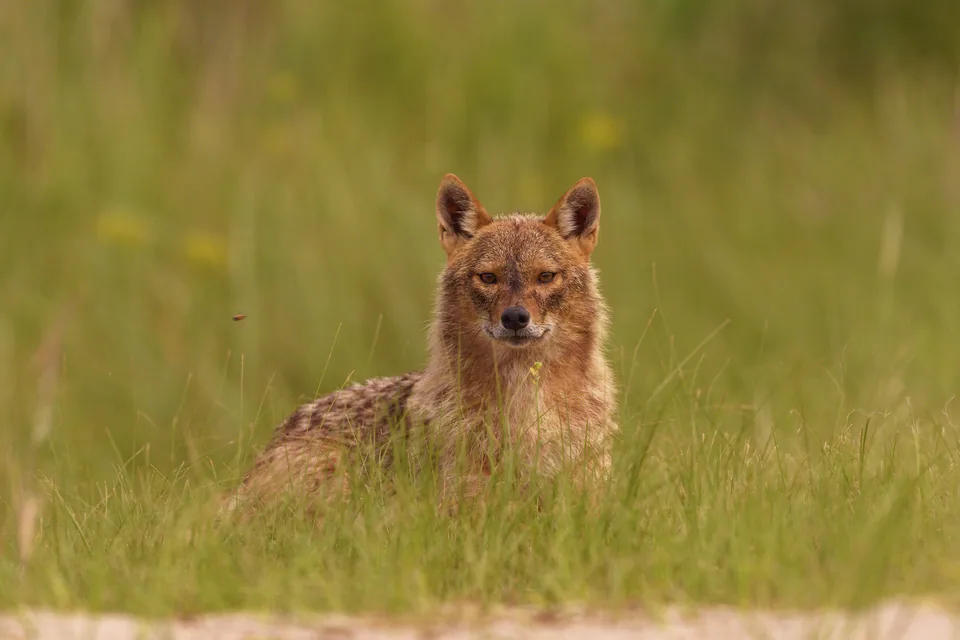
Dobrogea is not only about birds. Its open grasslands, rocky slopes, scrubby valleys, and forest-steppe habitats also support a varied mammal community. Among the mammals associated with the region are the European souslik, golden jackal, red fox, wild boar, roe deer, red deer in the Măcin area, wildcat, and species such as marbled polecat. Together, these mammals add another layer of ecological richness to the region and help define Dobrogea as more than just a birding area.
Its dry habitats are also important for reptiles, insects, and steppe flora, which contribute strongly to the character of the place. The broader landscape — with old hills, stony ridges, traditional grazing areas, and big skies — is part of what makes Dobrogea so memorable for travellers looking for something wilder and less expected.
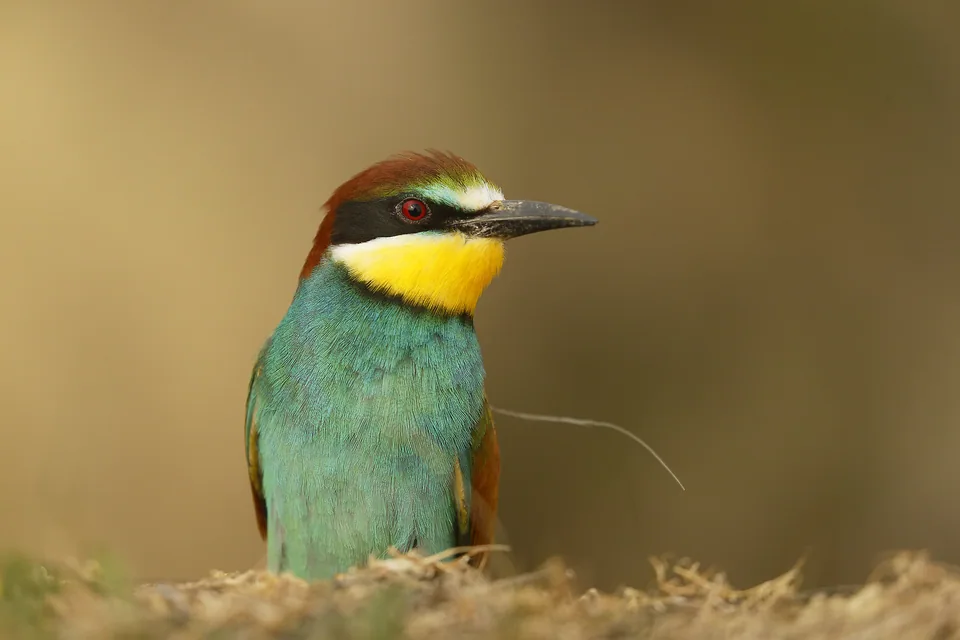
Dobrogea works best when it is explored with patience, local knowledge, and a strong feel for light, season, and habitat. It is a region of subtle detail: a buzzard on a distant post, rollers flashing over steppe, bee-eaters on sandy banks, pratincoles over dry ground, or migration suddenly building along the coast.
Our tours are designed to experience Dobrogea slowly and purposefully, combining birdwatching, photography, and habitat-based guiding in small groups. This allows you to enjoy not only the target species, but also the broader atmosphere of the region — its openness, its contrasts, and its special place between the Danube, the Black Sea, and the steppe world of southeastern Europe.
Dobrogea is in southeastern Romania, between the Danube and the Black Sea. It includes open steppe, limestone hills, dry valleys, forest-steppe and coastal lagoons.
Dobrogea offers opportunities for rollers, bee-eaters, wheatears, larks and raptors. Spring and migration bring different possibilities; wildlife sightings depend on the season and local conditions.
Several Just Wildlife Tours itineraries combine the Danube Delta wetlands with Dobrogea’s open habitats. Compare the individual departure pages for the time spent in each region and the photography or birdwatching focus.
10 April 2027
From €2690€2390
20 April 2027
From €2690€2390
2 May 2027
From €2090€1790
10 May 2027
From €2090€1790
10 May 2027
From €2690€2390
20 May 2027
From €1890€1590
27 May 2027
From €1890€1590
2 June 2027
From €1890€1590
14 June 2027
From €1890€1590
24 June 2027
From €1890€1590
8 July 2027
From €1890€1590
18 July 2027
From €1890€1590
2 August 2027
From €1890€1590
8 August 2027
From €2690€2390