
The Danube Delta has two pelican species that visitors often want to recognise: Great White Pelican, Pelecanus onocrotalus, and Dalmatian Pelican, Pelecanus crispus. Start with a clear view and several features. A distant bird, awkward light or an immature plumage can make an immediate identification less reliable than it seems.
Learn the names before comparing photographs
Use the scientific name alongside the common name when checking a reference. Translated bird names do not always resemble the English name. This is particularly useful when discussing a sighting with an international group or comparing books in different languages.
Keep the two species separate in your notes without forcing every bird into a category. Record an observation as an unidentified pelican if the view was incomplete. A useful field notebook describes the evidence rather than making the total look more impressive.
Look carefully at the head and overall appearance
The shaggy, curled-looking feathers on the Dalmatian Pelican’s head are a useful clue when the view allows it. Do not turn this into a rule that a smooth-looking distant head proves the other species. Distance, posture and image quality can hide details.
Compare photographs taken from a similar angle and think about whether you are looking at an adult. Avoid deciding from an exaggerated colour in an edited photograph. Ask your guide which visible features are useful on the particular bird in front of you.
Use the adult underwing as another comparison
In adult birds seen well from below, Great White Pelican shows a strong contrast between pale wing coverts and dark flight feathers. Dalmatian Pelican has a much paler-looking underwing overall. Treat this as a comparison to check in a suitable view, not a reason to make birds fly.
Wait for natural movement and use a sequence of reference photographs if possible. Check more than a single blurred frame. Young birds and incomplete views deserve extra care, and it is reasonable to ask for help or leave an identification unresolved.
Turn identification into observation
After checking the name, spend time watching what the birds do. Notice whether they rest, move together or feed, and how their position changes. Identification gives you a starting point for a richer encounter rather than ending the experience at the species label.
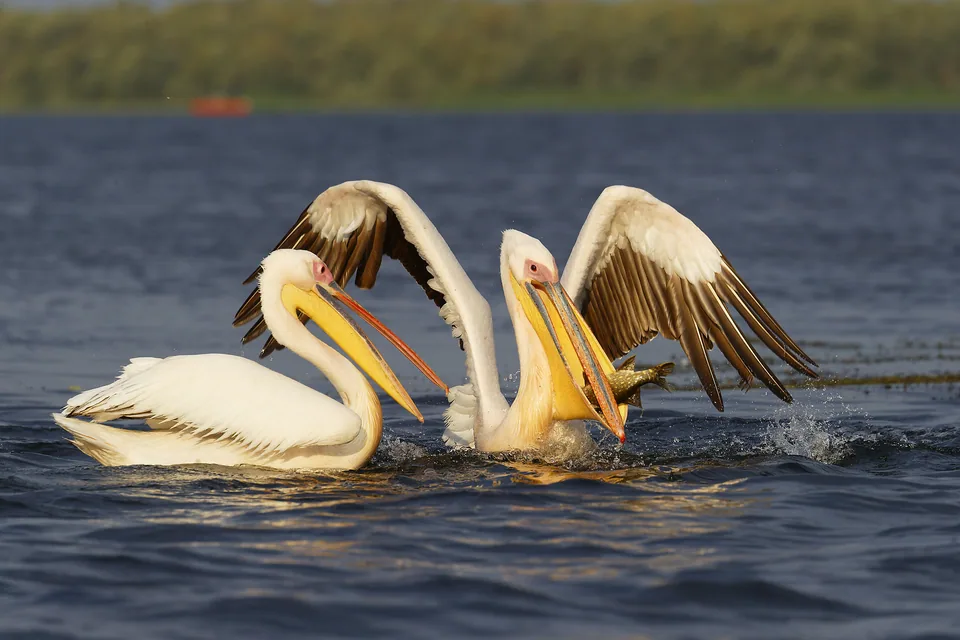
Photograph from a respectful distance and follow the guide’s instructions near groups of birds. The image illustrating this article shows Great White Pelicans; it is not a side-by-side identification plate. For your own comparisons, use clearly identified references and the same care you would apply in the field.
Before you go
- Match common names with Pelecanus onocrotalus or Pelecanus crispus.
- Check several features and be cautious with immature birds.
- Never disturb a pelican to obtain a flight view.
Turn your reading into time in the wild
Explore the relevant tours, then check each departure's itinerary, meeting point and equipment advice. Ask us if you would like help choosing.
Ask your local guide